SocialEcho vs Buffer vs Agorapulse: Which Social Media Tool Fits Your Team?
When three of the most talked‑about social media management platforms land on your shortlist, the real differentiators aren’t always visible on the pricing page. SocialEcho, Buffer, and Agorapulse each approach the social workflow from a different angle. Buffer puts simplicity and AI‑assisted content creation first, Agorapulse builds a fortress around its unified inbox and team workflows, and SocialEcho binds AI auto‑reply, listening, and competitor tracking together with per‑account pricing that ignores user counts.
This comparison homes in on where SocialEcho brings supported advantages while acknowledging the credible strengths of Buffer and Agorapulse. No filler, no false claims — just the criteria that matter when you’re choosing a tool for a global team, an agency, or a brand that needs to do more than schedule posts.
AI‑Powered Engagement: Auto‑Reply vs. AI Assistant vs. Reply Suggestions
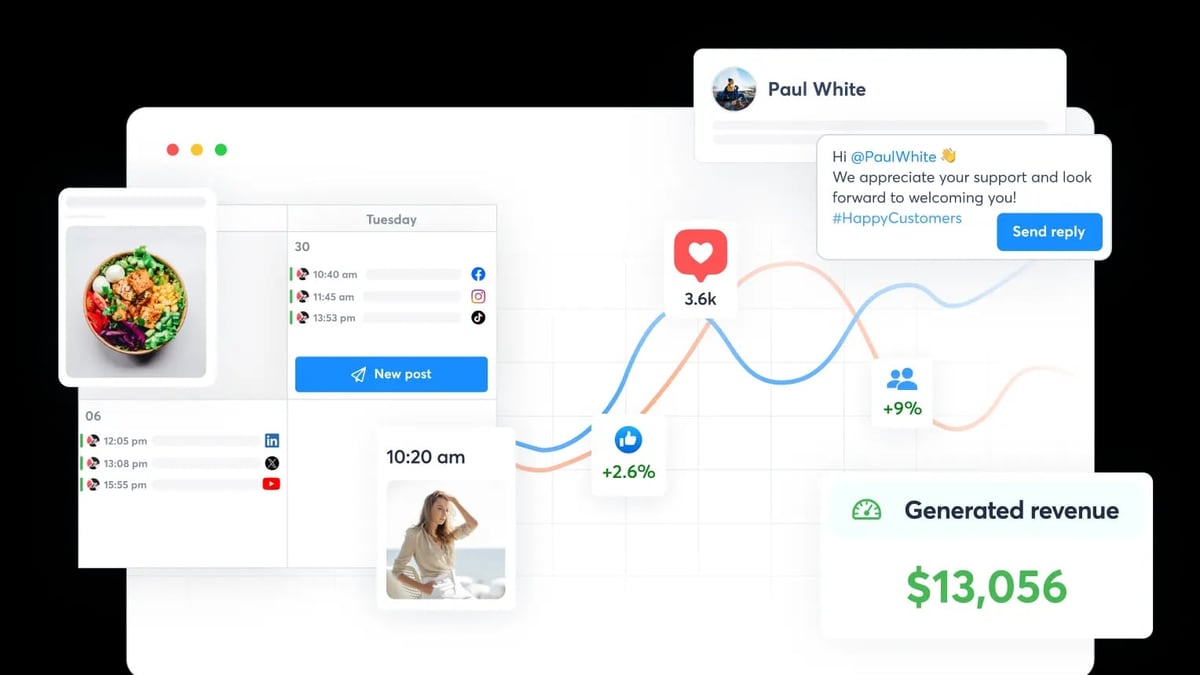
SocialEcho vs Buffer vs Agorapulse: Which Tool Fits Your Team? product interface and feature overview.
Artificial intelligence hits each tool at a different stage of your workflow.
Buffer’s AI Assistant is embedded inside the publisher. It helps you brainstorm captions, repurpose content, and refine drafts. Over 2.8 million words have been written by Buffer customers using the assistant, and it’s accessible on all paid plans right inside the web and mobile composer. However, once a post goes live, the AI steps back. There is no automated reply engine; comments and DMs must be handled manually through the engagement features, which are only available from the Essentials plan upwards. See source.
Agorapulse puts AI into the inbox. Its AI‑powered reply suggestions suggest pre‑written responses for common messages, which can speed up a support team without fully removing a human from the loop. Advanced plans also include automated moderation rules — for example, hiding comments that contain certain keywords. Yet there is no full, unsupervised auto‑reply, so high‑volume brands still need people staffing the inbox. Learn more.
SocialEcho’s advantage sits squarely in automation. The platform deploys AI auto‑reply with intent tagging across comments and DMs. Instead of suggesting a draft, it understands the query (complaint, praise, shipping question, lead) and responds in real time, in either English or Chinese. For a cross‑border e‑commerce brand fielding 500 comment threads a day, that difference can replace dedicated headcount without missing a message. Because SocialEcho bills by account, not by user, you don’t pay extra for the people who would otherwise be stuck inside the inbox. For a deeper side‑by‑side look at how this plays out against Buffer, see our SocialEcho vs Buffer analysis.
Social Listening & Competitor Tracking: Who Goes Beyond Scheduling?
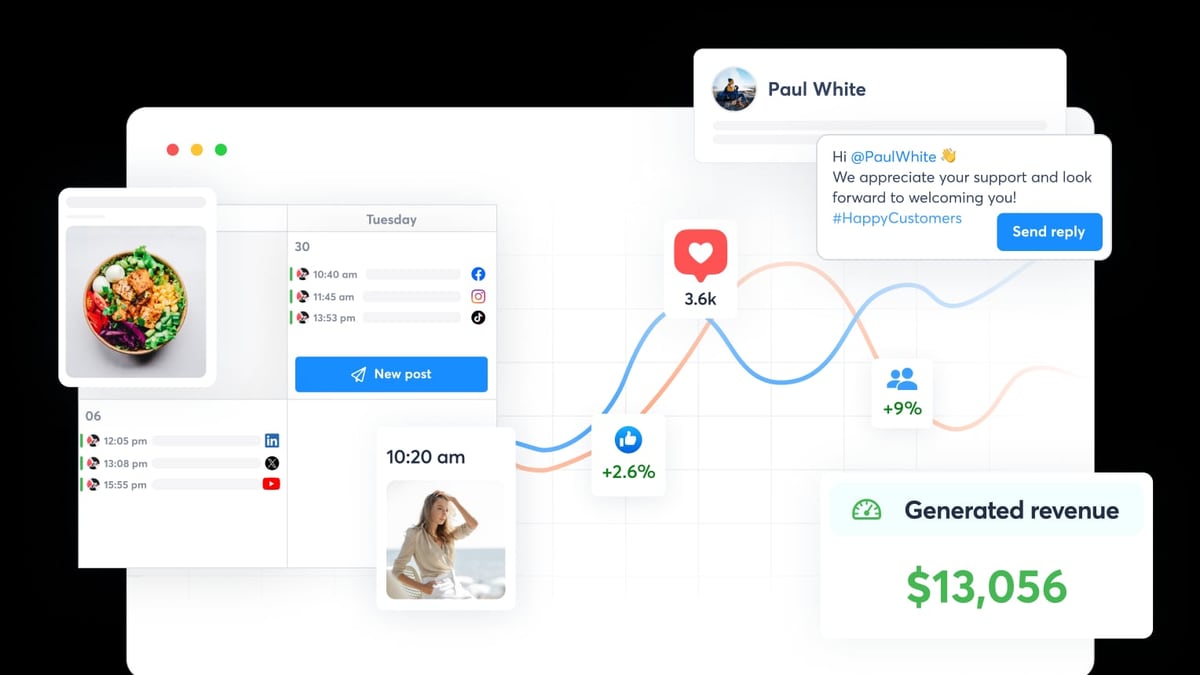
SocialEcho vs Buffer vs Agorapulse: Which Tool Fits Your Team? product interface and feature overview.
Publishing is table stakes. Understanding what people say about your brand — and what your competitors are doing — separates strategic teams from reactive ones.
Buffer does not offer social listening or competitor tracking. Its analytics focus on post performance and content metrics, which is enough for a creator measuring engagement, but it won’t surface an un‑tagged brand mention on X or monitor a rival’s campaign cadence.
Agorapulse includes a social listening module on its Advanced and Custom plans. You can monitor brand mentions, track hashtags, measure sentiment, and identify top influencers. Competitor benchmarking is also available, though it lives primarily inside the reporting suite rather than a dedicated competitor dashboard. The listening feature is well‑regarded — G2 reviewers consistently rank Agorapulse ahead of Buffer in this area — but it comes at a higher price tier with per‑user costs that can add up quickly. See source.
SocialEcho’s advantage combines social listening and competitor tracking into a centralized analytics workspace that’s included at the platform’s base level, not gated behind an enterprise add‑on. You can track competitor content strategies, benchmark engagement trends, and discover un‑tagged mentions across major platforms, all while the same AI engine that handles auto‑replies flags sentiment spikes and trending conversations. This integration removes the need to juggle a separate listening tool — a direct cost and cognitive saving for teams that need to act on insights, not just archive them.
Unified Inbox & Team Collaboration: Where Agorapulse Shines (and How SocialEcho Complements It)
SocialEcho vs Buffer vs Agorapulse: Which Tool Fits Your Team? product interface and feature overview.
Agorapulse built its reputation on a superior social inbox. Comments, DMs, ad comments, and mentions stream into a single view with labels, saved replies, bulk‑actions, and assignment rules. For teams that treat social as a support channel, it’s a genuinely strong selling point.
Buffer’s engagement tools are intentionally minimal. As of this writing, working with comments beyond Facebook and Instagram requires a paid plan, and there is no cross‑platform inbox that unifies everything. It works for a small brand that replies natively on each app, but it doesn’t scale to a multi‑brand team.
SocialEcho also provides a unified inbox, but it strengthens the model with two layers that Agorapulse doesn’t match:
- AI auto‑reply with intent tagging reduces inbox volume before a human ever sees it.
- Bilingual English/Chinese interface makes it a natural home for global teams managing Chinese‑speaking audiences alongside Western markets — something neither Buffer nor Agorapulse offer today.
So if your primary need is a meticulously organized inbox with human‑led triage, Agorapulse is a credible choice. If you want to shrink that inbox with AI and support multi‑language teams without extra tooling, SocialEcho’s approach fills the gap.
Pricing & Scalability: Per‑Account vs. Per‑User vs. Per‑Channel
How the three tools count what you pay for changes their affordability radically as a team grows.
- SocialEcho starts at $3 per account per month, with unlimited users on all plans and a free‑forever tier. A team managing 10 brand profiles can add unlimited members without the bill changing. That’s a rarity in the market and particularly valuable for agencies and cross‑border operations with large content teams.
- Buffer charges $5 per extra social channel on top of a plan base. The Team plan does include unlimited users for $100/month (10 channels), which is a good deal for mid‑sized teams that need a lot of people but only a few profiles. However, the free plan is genuinely generous — 30 scheduled posts — making Buffer tough to beat for solo creators. See source.
- Agorapulse bills per user as soon as you leave the Standard plan. The Professional plan is $80/month with one user; each additional user costs $79/month. At the Advanced tier, extra users jump to $119/month. For an agency juggling 15 client profiles with five team members, the math tilts fast toward five‑figure annual costs.
If you’ve been navigating Sprout Social’s similar per‑user model, our SocialEcho vs Sprout Social breakdown illustrates just how much you can save by moving to per‑account pricing.
Platform Coverage & Localization: Where SocialEcho Fits Cross‑Border Teams
SocialEcho vs Buffer vs Agorapulse: Which Tool Fits Your Team? product interface and feature overview.
Buffer’s credible strength is its channel reach. It supports Facebook, Instagram, LinkedIn, X, TikTok, YouTube Shorts, Pinterest, Google Business, Mastodon, and Bluesky — among others. For creators and brands that need to be everywhere, that breadth is a real advantage.
Agorapulse covers seven core networks: Facebook, Instagram, LinkedIn, X, YouTube, Google Business, and TikTok. Its platform list is solid but doesn’t extend to newer spaces like Mastodon or Threads.
SocialEcho runs on Facebook, Instagram, X, LinkedIn, TikTok, YouTube, and Telegram — a channel absent from both Buffer and Agorapulse. Telegram is central for many cross‑border sellers, crypto communities, and Asian‑market brands. Paired with a bilingual English/Chinese interface, SocialEcho gives global teams a localized workspace that the other two tools don’t provide. No one tool supports every channel, so the differentiator is whether the channels you actually use are covered.
Compliance & Security: Enterprise‑Grade Certifications
When data passes through a social media tool, certifications are more than a checkbox. SocialEcho carries ISO 27001, ISO 27701, and SOC 2 certifications, and is GDPR and CCPA compliant — a full enterprise‑grade stack. Buffer follows WCAG 2.1 AA accessibility standards and maintains strong privacy controls, but doesn’t publicly list equivalent ISO or SOC 2 audit reports. Agorapulse may offer enterprise security on custom plans, yet its standard documentation doesn’t surface those certifications for every customer.
For regulated industries, multinational brands, or anyone processing personal data at scale, SocialEcho’s transparent compliance posture becomes a material advantage. See official comparison.
When Should You Choose Each Tool?
Choose SocialEcho if you need:
- AI‑driven auto‑reply to comments and DMs at scale, without per‑user fees.
- Built‑in social listening and competitor tracking in one workspace.
- Per‑account pricing that fits agencies and global teams with unlimited members.
- Telegram support and a bilingual Chinese/English interface.
- Documented ISO 27001, SOC 2, and GDPR compliance out of the box.
Choose Buffer if you need:
- The simplest possible scheduler with a generous free plan and AI writing assistant for content creation.
- A cost‑effective Team plan with unlimited users for a mid‑sized team focused on publishing.
- Support for niche creative channels like Pinterest, Mastodon, or Bluesky.
Choose Agorapulse if you need:
- The most advanced unified inbox with multi‑step approval workflows and saved replies.
- In‑depth reporting with ROI analysis and competitor benchmarking for executive presentations.
- A proven customer support organization with 24/7 responsiveness and a track record of high NPS.
For a closer look at how SocialEcho stacks up against agency‑focused alternatives, read our SocialEcho vs Sendible comparison.
Related reading
- SocialEcho vs Ocoya: AI Engagement vs Simple Scheduling - Compare SocialEcho vs Ocoya: AI auto-reply, social listening, compliance, and per-account pricing vs basic AI caption writing and scheduling. See which fits global teams.
- SocialEcho vs Sprout Social: Best AI Social Media Tool 2026? - Compare SocialEcho vs Sprout Social on AI auto-reply, pricing ($3/account vs $199/user), social listening, Telegram support, and compliance. Find the smarter social tool.
- SocialEcho vs Pallyy vs Sprinklr: Which Tool Wins in 2026? - Compare SocialEcho, Pallyy, and Sprinklr on AI features, pricing, scheduling, and enterprise readiness. See which social media management platform suits your team in 2026.
FAQ
Does SocialEcho offer a free trial? Yes, a 7‑day free trial is available with no credit card required. A free‑forever plan is also offered for lighter use.
Can I manage Telegram with Buffer or Agorapulse? As of now, neither Buffer nor Agorapulse supports Telegram publishing or engagement. SocialEcho is one of the few all‑in‑one tools with native Telegram integration.
Which tool is best for a team that handles customer service on social media? Agorapulse’s inbox is purpose‑built for customer service with assignment rules and canned replies. SocialEcho adds AI auto‑reply to handle the first response automatically, which can reduce ticket volume. Buffer is not designed for high‑volume social customer service.
How does SocialEcho’s pricing compare when adding team members? SocialEcho bills per social account, not per user. You can have unlimited team members without any increase in your subscription. In contrast, Agorapulse charges $79–$119 per additional user on its higher plans, and Buffer’s Essentials plan only includes one user until you jump to the Team plan.
Conclusion
Buffer, Agorapulse, and SocialEcho each serve a specific social team profile. Buffer wins on simplicity and creator‑friendly channels; Agorapulse earns its reputation on inbox management and team governance. SocialEcho carves out a unique position by embedding genuine automation — auto‑reply, listening, competitor tracking — into a per‑account pricing model that scales without punishing growth. If your social strategy demands more than a scheduling tool and you want to avoid the creeping cost of per‑user billing, now is the time to test a platform built for that reality.