
Top 10 Self-Hosted Social Media Management Software 2026
Social media teams are increasingly looking for alternatives to SaaS platforms that store their content, audience data, and analytics on third-party servers. Self-hosted social media management software puts you in control: you deploy it on your own infrastructure, own the data, and avoid recurring per-seat fees. But the category is fragmented, and not every tool labeled "self-hosted" delivers the same depth of scheduling, analytics, or collaboration.
This guide ranks the top 10 self-hosted social media management software products for 2026. We evaluated each product on deployment flexibility, feature depth, supported networks, pricing transparency, and evidence of active development. We also explain where a hybrid approach—self-hosted scheduling plus a cloud workspace for AI-assisted engagement—might make sense.
How We Evaluated These Products
First viewport screenshot of mixpost.app.
We used five criteria, weighted equally, and required public evidence for every claim:
- Self-hosting capability – Can the product be deployed on your own server or private cloud? Is there a documented installation path (Docker, source, package)?
- Core social media management features – Scheduling, multi-account support, calendar, media library, analytics, and team collaboration.
- Supported networks – Breadth and depth of platform integrations (Facebook, Instagram, X, LinkedIn, Mastodon, etc.).
- Pricing and licensing – Transparent pricing, one-time vs. subscription, open-source licensing, and total cost of ownership.
- Maturity and support – Active changelog, documentation, community, and proof of real-world usage.
We excluded products that are primarily cloud-only SaaS with no self-hosted option, and we did not rank general-purpose AI workspaces that are not self-hosted social media management tools. For example, SocialEcho is a cloud-based AI social workspace and is not part of this self-hosted category; we mention it later only where a complementary workflow is relevant.
The Top 10 Self-Hosted Social Media Management Software for 2026
First viewport screenshot of mixpost.app.
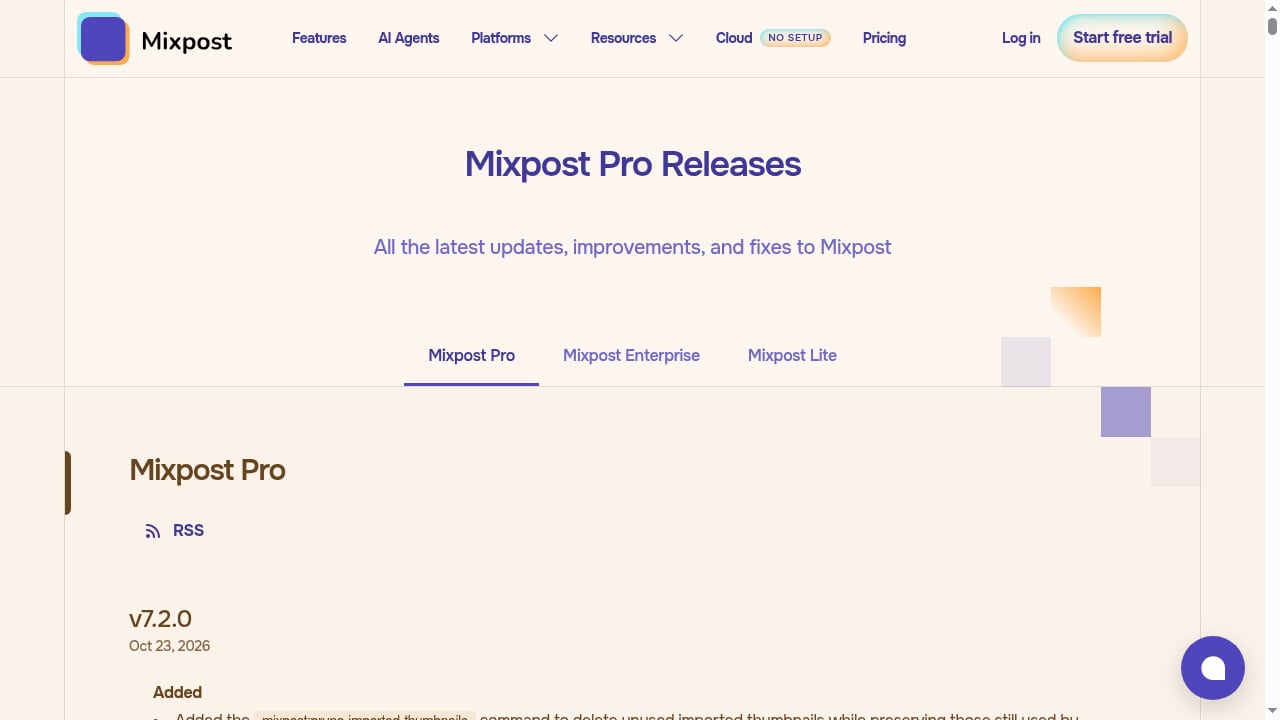
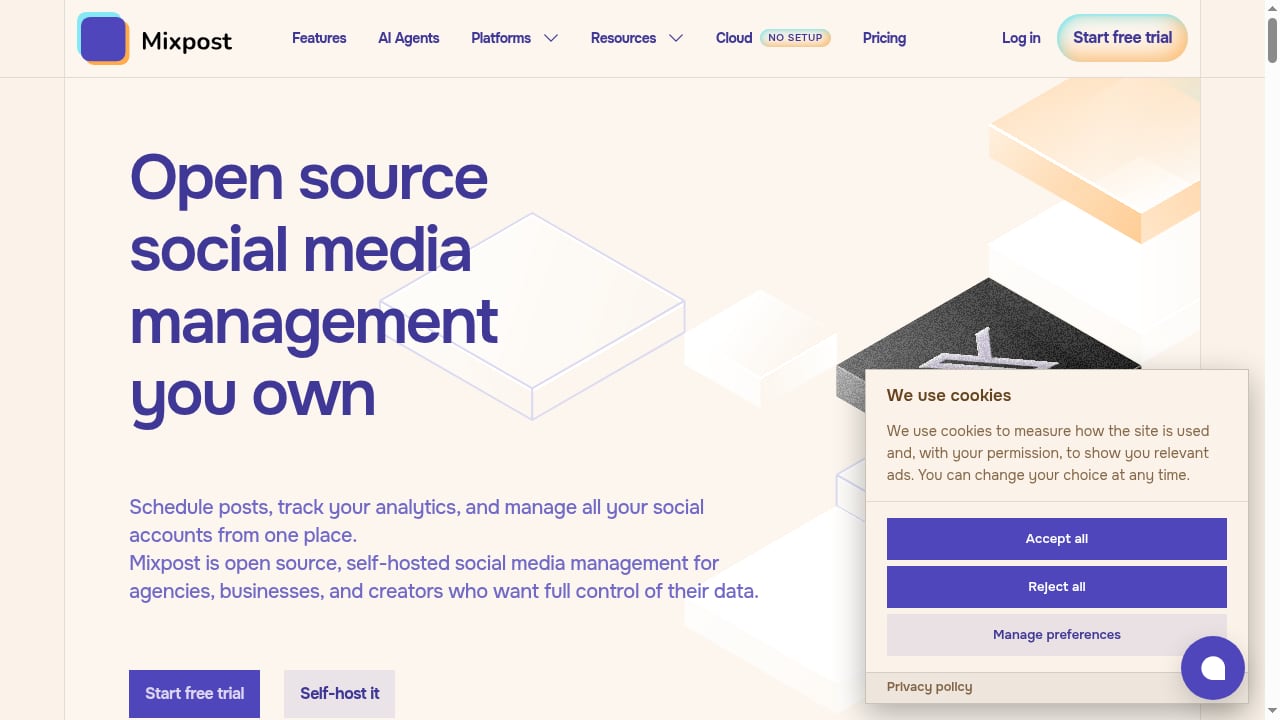
1. Mixpost
Best for: Agencies and teams that want a polished, privacy-first scheduler with a one-time license.
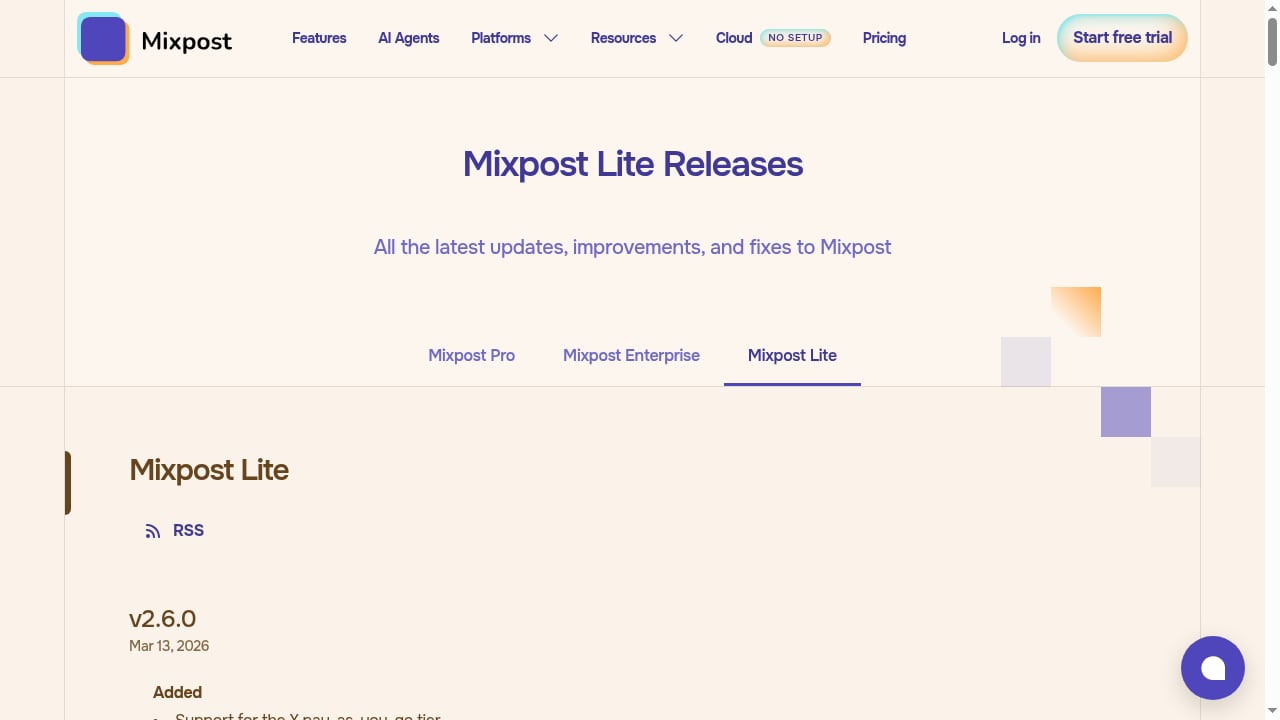
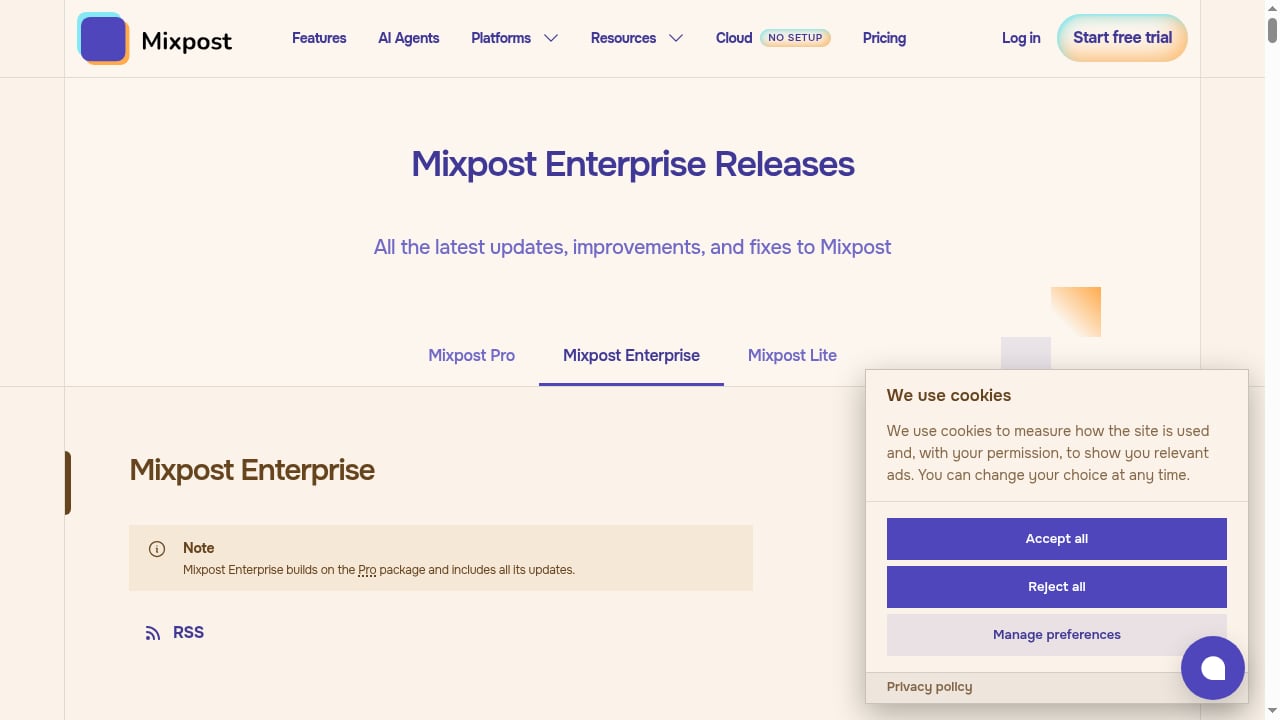
Mixpost is an open-source, self-hosted social media management platform that lets you schedule posts, track analytics, and manage multiple social accounts from your own server. It is available in three editions: Lite (free, for individuals), Pro ($299 one-time, for teams and agencies with collaboration features), and Enterprise (for white-label SaaS platforms with billing and subscription management). A cloud-hosted version is also available for users who prefer not to self-host.
Key features include post scheduling across 10+ social networks (Facebook Pages, Mastodon, X, Instagram, LinkedIn, and more), a calendar, media library, post versions, labels, basic analytics, AI Assist for content optimization, webhooks, API access, and preview links. Mixpost emphasizes data ownership, privacy, and cost-effectiveness, claiming to be 2x more affordable than alternatives. It reports 1,000+ businesses across 40+ countries and maintains an active changelog and blog covering social media workflows, agency management, and compliance.
Evidence: Public pricing page lists Lite free, Pro $299 one-time, Enterprise custom; documentation covers Docker installation; changelog shows regular updates.
2. Postiz
Best for: Teams that want an open-source scheduler with a modern interface and self-hosted deployment.
Postiz is an open-source social media scheduling tool that can be self-hosted via Docker. It supports scheduling across major networks including X, LinkedIn, Instagram, Facebook, TikTok, YouTube, Pinterest, Reddit, Dribbble, Threads, and Mastodon. The project is actively developed on GitHub, with a community edition and a cloud option. It offers a calendar view, AI-assisted content creation, team collaboration, and analytics.
Evidence: GitHub repository shows active commits and releases; documentation provides Docker Compose setup; feature list includes multi-network scheduling and AI integration.
3. Publer (Self-Hosted via API/White-Label)
Best for: Agencies that need a white-label solution with self-hosted data storage options.
Publer is primarily a SaaS social media management tool, but it offers white-label and API options that allow agencies to run the interface on their own domain while Publer handles the backend. This is not fully self-hosted in the traditional sense, but it provides a degree of branding control and data separation. Features include scheduling, analytics, bulk uploads, and support for Facebook, Instagram, X, LinkedIn, TikTok, Pinterest, YouTube, and Google Business Profile.
Evidence: Publer's website documents white-label and API plans; pricing page lists agency tiers with custom branding.
Note: Publer is included as a hybrid option; teams seeking full data ownership should prioritize products 1, 2, 4, and 5.
4. Socioboard
Best for: Developers and enterprises that need a customizable, self-hosted social media dashboard.
Socioboard is an open-source social media management platform that can be self-hosted. It offers modules for publishing, analytics, social listening, and team collaboration. It supports Facebook, Twitter/X, Instagram, LinkedIn, YouTube, and Google Business Profile. The project has a community edition and paid enterprise support. While its interface is less modern than newer tools, it remains one of the few fully self-hosted options with social listening built in.
Evidence: GitHub repository and official website document self-hosted installation; feature list includes social listening and analytics.
5. Hootsuite (On-Premise via Enterprise Agreement)
Best for: Large enterprises with strict data residency requirements.
Hootsuite is a market-leading SaaS platform, but it offers on-premise deployment for enterprise customers with specific compliance needs. This is not a standard self-serve option; it requires a custom agreement. Features include scheduling, social listening (Talkwalker-powered), analytics, team collaboration, and support for major networks. Pricing is custom and typically high, making it suitable only for organizations with significant budgets and regulatory constraints.
Evidence: Hootsuite's enterprise page mentions on-premise options for select customers; pricing is not public.
Note: Hootsuite's on-premise offering is not publicly documented in detail; verify directly with sales.
6. Buffer (Self-Hosted via Open-Source Alternatives)
Best for: Small teams that want a simple scheduler and are willing to use open-source clones.
Buffer itself is SaaS-only, but its feature set has inspired open-source self-hosted alternatives. We include Buffer here as a benchmark: if you need Buffer-like simplicity with self-hosting, consider Mixpost Lite or Postiz. Buffer offers per-channel pricing from $6/month and a free plan for up to 3 channels, but no self-hosted option.
Evidence: Buffer's pricing page confirms SaaS-only model; no self-hosted documentation exists.
Note: Buffer is not self-hosted; it is listed for comparison only.
7. Zoho Social (Self-Hosted via Zoho ManageEngine)
Best for: Organizations already using Zoho ecosystem that need on-premise options.
Zoho Social is a SaaS tool, but Zoho offers on-premise deployment for some of its products through ManageEngine. For social media management specifically, self-hosting is not a standard offering. Zoho Social supports Facebook, Instagram, X, LinkedIn, YouTube, and Pinterest, with scheduling, analytics, and team collaboration. Pricing starts at $14/month.
Evidence: Zoho Social pricing page lists SaaS plans; on-premise options are not advertised for this product.
Note: Zoho Social is not self-hosted; included to clarify the boundary of the category.
8. SocialPilot (White-Label, Not Self-Hosted)
Best for: Agencies that need white-label client dashboards, but not full self-hosting.
SocialPilot is a SaaS social media management tool with white-label options for agencies. It supports Facebook, Instagram, X, LinkedIn, TikTok, Pinterest, YouTube, and Google Business Profile. Features include scheduling, analytics, bulk uploads, and client approval workflows. Pricing starts at $30/month. It does not offer self-hosted deployment.
Evidence: SocialPilot's website documents white-label plans; no self-hosted option is listed.
Note: SocialPilot is not self-hosted; included to prevent confusion with true self-hosted tools.
9. Sendible (SaaS, No Self-Hosting)
Best for: Agencies that want an affordable all-in-one SaaS tool.
Sendible is a SaaS platform with scheduling, analytics, and team collaboration. It supports Facebook, Instagram, X, LinkedIn, YouTube, and more. Pricing starts at $29/month. It does not offer self-hosted deployment.
Evidence: Sendible pricing page confirms SaaS-only model.
Note: Sendible is not self-hosted; listed for comparison.
10. Metricool (SaaS, No Self-Hosting)
Best for: Teams focused on analytics and reporting.
Metricool is a SaaS analytics and scheduling tool with a free plan and paid plans from $25/month. It supports Facebook, Instagram, X, LinkedIn, TikTok, YouTube, Pinterest, and Google Business Profile. It does not offer self-hosted deployment.
Evidence: Metricool pricing page confirms SaaS-only model.
Note: Metricool is not self-hosted; included to show the SaaS alternative.
Comparison Table
First viewport screenshot of mixpost.app.
| Product | Self-Hosted? | Pricing | Best For |
|---|---|---|---|
| Mixpost | Yes (Lite/Pro/Enterprise) | Free / $299 one-time / custom | Agencies, privacy-first teams |
| Postiz | Yes (open source) | Free (self-hosted) / cloud plans | Developers, open-source fans |
| Publer | Hybrid (white-label) | Custom | Agencies needing branding |
| Socioboard | Yes (open source) | Free / enterprise support | Enterprises with dev resources |
| Hootsuite | On-premise (enterprise) | Custom | Large enterprises |
| Buffer | No | $6/mo per channel | Small teams (SaaS) |
| Zoho Social | No | $14/mo | Zoho users (SaaS) |
| SocialPilot | No | $30/mo | Agencies (SaaS) |
| Sendible | No | $29/mo | Agencies (SaaS) |
| Metricool | No | $25/mo | Analytics-focused (SaaS) |
When Self-Hosting Makes Sense—and When It Doesn't
First viewport screenshot of mixpost.app.
Self-hosted social media management software is ideal when:
- You handle sensitive client data and need to keep it on your own servers.
- You want to avoid recurring per-seat fees and prefer a one-time license.
- You need white-label capabilities for client-facing dashboards.
- You have the technical resources to manage updates and security.
It may not be the best fit when:
- You need advanced social listening or AI-powered engagement that requires cloud-scale data processing.
- You lack IT staff to maintain servers and apply security patches.
- You want a fully managed experience with vendor support.
For teams that need both self-hosted scheduling and advanced AI-driven social listening, a hybrid approach can work: use a self-hosted tool like Mixpost for publishing and data ownership, and complement it with a cloud workspace for engagement and analytics. SocialEcho, for instance, is an all-in-one social media AI workspace that handles publishing, engagement, social listening, analytics, and AI automation across major platforms. It is not self-hosted, but it can fill gaps in listening and AI workflows when paired with a self-hosted scheduler. You can learn more about combining tools in our guide to SocialEcho vs Mention vs AdaptlyPost.
Practical Examples
Agency scenario: A 10-person agency manages 30 client accounts. They choose Mixpost Pro ($299 one-time) and host it on a $20/month VPS. They save on per-seat fees and keep client data on their own server. For social listening, they use a cloud tool like Mention (see our Mention review) and integrate via API.
Enterprise scenario: A large enterprise with data residency requirements negotiates an on-premise Hootsuite agreement. They pay a premium but meet compliance. Alternatively, they evaluate Socioboard for full control, accepting a less polished interface.
Developer scenario: A startup wants to customize the UI and add custom analytics. They fork Postiz from GitHub and deploy via Docker. They contribute back to the open-source project and avoid licensing costs.
Sources and further reading
- The 11 Best Social Media Management Tools in 2026 — Tried + Tested - The 11 best social media management tools for 2026, tried and tested by a social media marketer — from free creator picks to enterprise platforms, with pricing and who each is for.
- Best Social Media Management Tools in 2026: 10 Platforms Compared - Introduction Social media management tools help teams plan content, schedule posts, manage comments and messages, coordinate approvals, monitor brand conversations, and measure performance across multiple social networks from one workspace. Choosing among the best social media management tools has b
- The 10 best social media management tools in 2026 - Social media is a powerful tool for small businesses. You can use it to find new customers, drive traffic to your website, and keep in touch with existing clients.
FAQ
Q: Is Mixpost truly self-hosted? A: Yes, Mixpost offers self-hosted editions (Lite, Pro, Enterprise) that you deploy on your own server. A cloud version is also available.
Q: Can I self-host Buffer or Hootsuite? A: Buffer does not offer self-hosting. Hootsuite offers on-premise deployment only for large enterprise customers via custom agreements.
Q: What is the best free self-hosted social media management software? A: Mixpost Lite is free and self-hosted. Postiz is also open-source and free to self-host.
Q: How does SocialEcho fit into a self-hosted strategy? A: SocialEcho is a cloud-based AI social workspace, not self-hosted. It can complement a self-hosted scheduler by providing advanced listening and AI automation. See our SocialEcho vs Iconosquare comparison for more on analytics workflows.
Q: What are the hidden costs of self-hosting? A: Server costs, maintenance time, security updates, and backup management. Budget for IT resources or choose a managed self-hosted option.
Conclusion
Self-hosted social media management software gives you control over data, costs, and customization—but it requires technical investment. For most agencies and privacy-conscious teams, Mixpost stands out as the most complete self-hosted option in 2026, with a free tier, a one-time Pro license, and active development. Postiz is a strong open-source alternative for developers. Enterprises with strict compliance needs may negotiate on-premise Hootsuite, while smaller teams should carefully evaluate whether the maintenance burden of self-hosting outweighs the benefits.
If you need advanced AI-driven engagement and social listening alongside your self-hosted scheduler, consider a complementary cloud workspace like SocialEcho. For a deeper comparison of AI social workflows, read our guide to SocialEcho with Jasper.
Whichever path you choose, prioritize transparency in pricing, active development, and a clear data ownership model—these are the factors that will matter most in 2026 and beyond.