SocialEcho vs Buffer vs Dash Social: Which Social Media Management Platform Fits Your Team in 2026?
Choosing between SocialEcho, Buffer, and Dash Social isn’t just about picking a scheduler—it’s about finding the right balance of price, AI automation, engagement, analytics, and enterprise-grade capabilities. At SocialEcho, we’ve tested these platforms side by side so you can skip the guesswork. Whether you’re a solo creator, a growing cross-border e-commerce team, or a large brand banking on visual storytelling, this comparison will help you decide.
Pricing: Which Platform Offers the Best Value?

SocialEcho vs Buffer vs Dash Social: 2026 Comparison product interface and feature overview.
Cost often narrows the field first. Here’s how the three platforms stack up:
| Plan Tier | SocialEcho | Buffer | Dash Social |
|---|---|---|---|
| Free | Free forever plan (basic features, 5 accounts) | Free plan (up to 3 channels) | 14-day free trial, then paid only |
| Entry‑level paid | $3/account/month (flexible add‑ons) | Essentials: $6/month per channel | Engage: starting at $999/month (unlimited seats) |
| Team | $15/month (5 accounts) | Team: $12/month per channel | Custom enterprise pricing |
| Agency/Enterprise | Customised scaling | Agency: $120/month for 10 channels | Fully customised enterprise plans |
What this means for you:
- SocialEcho leads on pure cost-effectiveness, especially for small to mid-sized teams managing 5 or more accounts. Its free forever plan is unique among the three.
- Buffer is wallet-friendly for solo creators and lean teams, with a transparent per-channel model and a generous free tier.
- Dash Social targets established brands and agencies; its starting price of $999/month places it squarely in the enterprise bracket, but it bundles unlimited seats and deep analytics.
Publishing & AI Automation: Who Saves You the Most Time?
SocialEcho vs Buffer vs Dash Social: 2026 Comparison product interface and feature overview.
Content creation and scheduling form the backbone of any social media tool. Here, automation makes a measurable difference.
SocialEcho goes beyond basic scheduling with AI-assisted content generation and cross-platform adaptation. Its AI can generate post variations for different networks, suggest optimal posting times, and even handle LinkedIn bulk posting. Teams that publish high volumes across Facebook, Instagram, X, LinkedIn, TikTok, YouTube, and Telegram will find this a massive time-saver. The batch scheduling and AI-driven draft capabilities allow you to plan an entire week in one sitting.
Buffer keeps publishing refreshingly simple. Its visual calendar is clean, and the built-in AI assistant helps brainstorm captions and edit text. However, the AI stops at content suggestions—there’s no automatic cross-platform adaptation or AI-generated post variations. For solo creators and small teams that don’t need heavy automation, Buffer’s straightforward workflow is a plus.
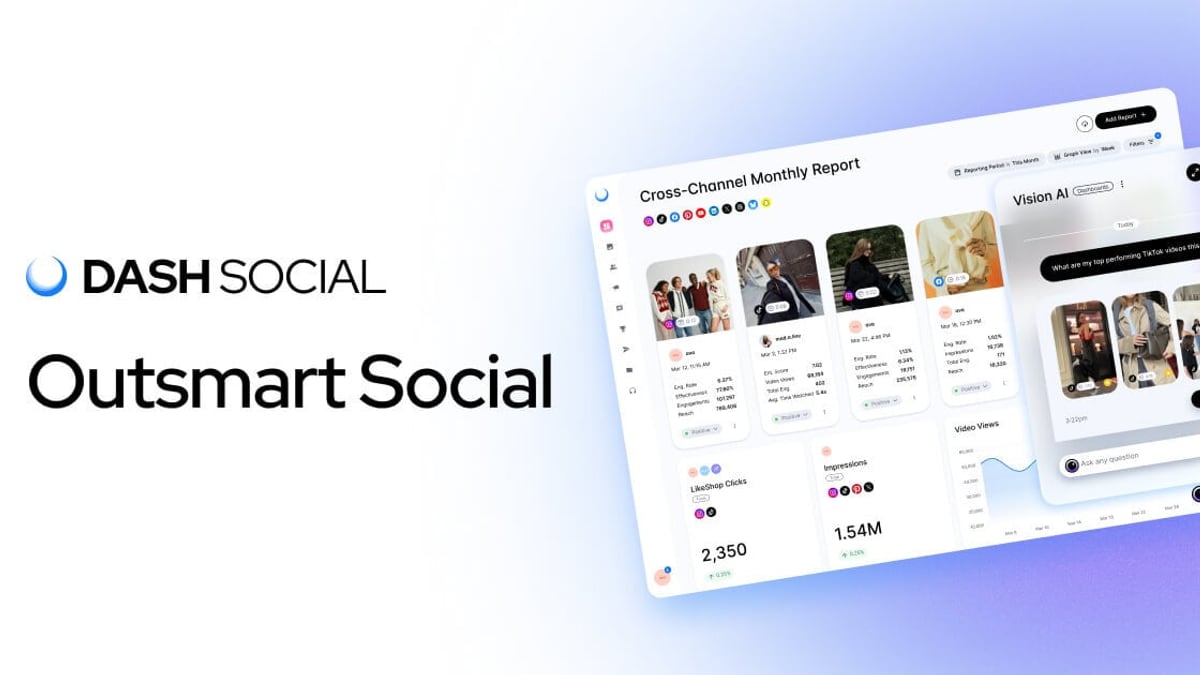
Dash Social focuses its AI power on visual intelligence rather than text generation. The platform predicts content performance with AI-driven visual scores, helping brands choose the images and videos most likely to resonate. While it supports scheduling across major platforms, it doesn’t offer the AI-writing or auto-posting variety that SocialEcho delivers.
Bottom line: If AI-powered writing, platform-specific variation, and batch cross-posting are priorities, SocialEcho holds a clear edge. Buffer shines for those who want simplicity without extra AI noise. Dash Social wins when your content is highly visual and performance forecasting matters more than drafting help.
Engagement & Unified Inbox: Managing Conversations at Scale

SocialEcho vs Buffer vs Dash Social: 2026 Comparison product interface and feature overview.
Responding to comments and DMs across channels can make or break brand perception.
- SocialEcho stands out with its unified inbox and AI auto-reply engine. The platform centralises comments and direct messages from Facebook, Instagram, X, LinkedIn, and more, then suggests or even sends AI‑generated replies for common queries. This drastically cuts response time and keeps the team from hopping between native apps.
- Buffer recently added a community engagement tool that lets you reply to comments directly inside the app, but it lacks a true multi‑platform unified inbox. For teams needing to manage hundreds of daily interactions, Buffer’s engagement layer may feel lightweight.
- Dash Social offers a sophisticated unified community inbox with sentiment monitoring and filtering. It’s built for large customer‑service teams that need to triage messages at volume. However, Dash Social does not include AI‑suggested responses—an area where SocialEcho earns extra efficiency points.
Objectively, SocialEcho’s AI reply suggestions give it a proven advantage for teams that handle repetitive customer questions. Dash Social’s inbox, however, is more powerful for enterprises that need advanced sentiment tracking and workflow routing.
Analytics & Reporting: Turning Data into Decisions
SocialEcho vs Buffer vs Dash Social: 2026 Comparison product interface and feature overview.
When it’s time to prove ROI, analytics tell the story.
- SocialEcho serves well‑rounded custom reports, competitor tracking, and an engagement rate calculator. You can generate visual‑friendly dashboards that combine growth trends, content performance, and industry benchmarks—enough for most mid‑sized teams to impress stakeholders.
- Buffer provides clean, actionable insights on post performance and audience growth. It’s sufficient for tracking what works, but you won’t find custom report builders, competitive analysis, or social listening baked in.
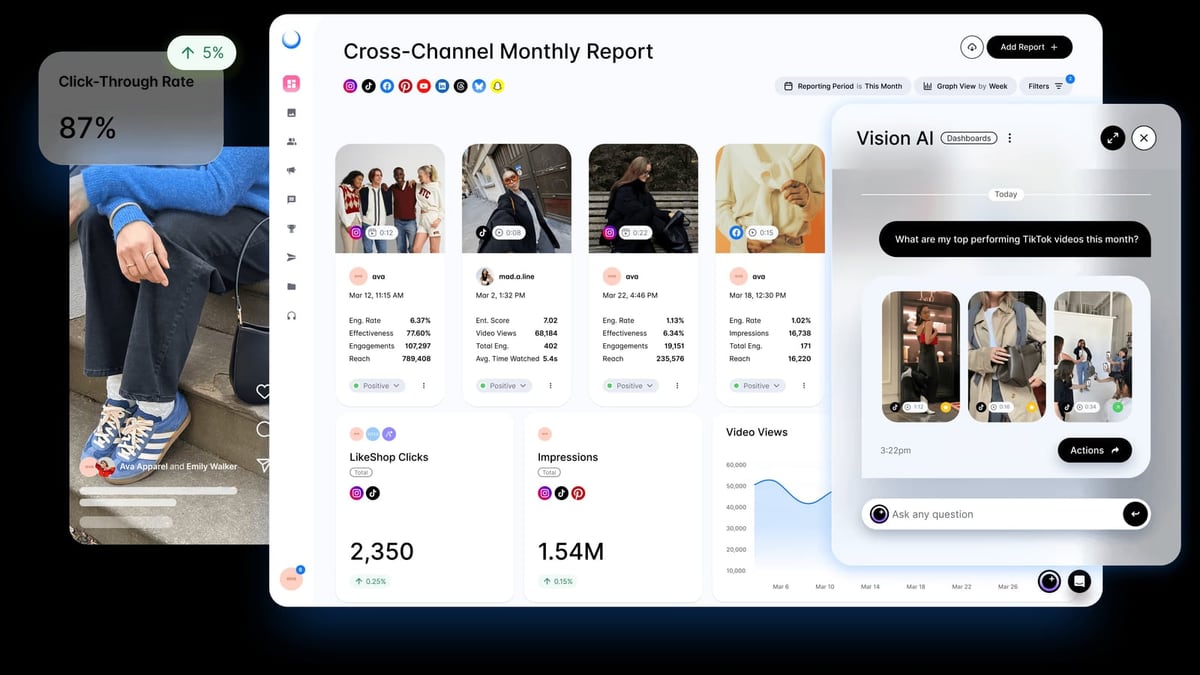
- Dash Social is the analytics heavyweight. Its proprietary visual AI rates content before you post, benchmarks your brand against competitors across channels, and surfaces deep insights like share of voice, sentiment trends, and creative‑asset performance. For data‑obsessed, enterprise marketing teams, Dash Social’s reporting is unmatched.
SocialEcho’s differentiator in this category is its competitor tracking and built‑in reporting at an accessible price—features Buffer cannot match and Dash Social packages only at the high end.
Social Listening & Competitive Intelligence
Both SocialEcho and Dash Social include robust social listening, while Buffer does not.
- SocialEcho lets you monitor keywords, brand mentions, and competitor activity on X, LinkedIn, and other channels. It’s especially useful for cross‑border teams that need to track conversations in multiple languages.
- Dash Social elevates listening with advanced sentiment analysis and competitive benchmarking dashboards. Brands like Cotton On rely on its insights to shape content strategy.
- Buffer stays out of the listening arena, focusing purely on publishing and basic engagement.
For teams that must stay on top of industry chatter and competitor moves, both SocialEcho and Dash Social deliver. SocialEcho offers a more cost‑conscious path to the same capability, while Dash Social adds deeper enterprise‑grade visual and sentiment intelligence.
Team Collaboration & Security Compliance
This is where SocialEcho carves a distinct identity.
- SocialEcho is built for global teams with multi‑account management, role‑based permissions, approval workflows, and enterprise‑grade security. It holds ISO 27001, ISO 27701, and SOC 2 certifications, and complies with GDPR and CCPA. The platform also supports both Chinese and English interfaces—a critical feature for cross‑border sellers and foreign trade companies.
- Buffer offers basic team features like shared access and role controls on higher plans, but it lacks the deep approval hierarchies and the regulated‑industry certifications that SocialEcho carries.
- Dash Social provides scalable seats and collaboration features for large organizations, yet it doesn’t publicly highlight the same slate of international security certifications.
Organizations that handle sensitive customer data or operate under strict compliance requirements will find SocialEcho’s security posture reassuring. For a deeper look at how SocialEcho stacks up against Dash Social and Sprout Social on security and features, read our side‑by‑side comparison.
Platform & Network Coverage
All three platforms cover the majors—Facebook, Instagram, X, LinkedIn, TikTok. The differences emerge in niche networks:
- Buffer boasts the widest range, including Threads, Bluesky, YouTube Shorts, Pinterest, Google Business, and Mastodon. If your brand lives on emerging or visual‑first platforms, Buffer’s breadth is hard to beat.
- SocialEcho uniquely supports Telegram, a vital channel for many international markets, and also covers YouTube (full platform, not just Shorts). This makes it a strong pick for businesses that engage audiences on messaging apps.
- Dash Social focuses on the core visual platforms—Instagram, Facebook, TikTok, and the like. Its specialty is depth over breadth, with tools like shoppable media and Instagram product tagging integrations that go beyond simple posting.
Which Tool Is Right for You?
| Your Situation | Best Fit | Why |
|---|---|---|
| Solo creator or tiny team on a tight budget, need a simple scheduler | Buffer | Free plan covers three channels; interface is intuitive; AI assistant gives a creative nudge without complexity. |
| Growing agency or mid‑sized team that needs AI engagement, listening, and multilingual support | SocialEcho | Affordable per‑account pricing, AI auto‑reply, competitor tracking, and strong compliance; ideal for cross‑border operations. |
| Established brand betting on visual content, creator partnerships, and deep analytics | Dash Social | Best‑in‑class visual AI, competitive benchmarking, and unified inbox built for scale; start at $999/month. |
If you’re also weighing SocialEcho against Buffer and a tool like Ocoya, you can find an expanded analysis here.
Related reading
- SocialEcho vs Ocoya vs Dash Social: 2026 Comparison - Compare SocialEcho, Ocoya, and Dash Social on AI engagement, content creation, social listening, pricing, and security. Find the best social media management platform for your team.
- SocialEcho vs Hootsuite vs Planable: Which Tool Is Right for You? - Compare SocialEcho, Hootsuite, and Planable on pricing, AI, collaboration, and social listening. Find the best social media management platform for your team.
- SocialEcho vs Ocoya vs Sendible: Which Tool Is Right for You? - Compare SocialEcho, Ocoya, and Sendible on AI features, pricing, social listening, and compliance. Find the best social media management platform for cross-border teams, agencies, and eCommerce.
Sources and further reading
- SocialEcho vs Sprout, Social vs Buffer: The Ultimate Comparison of Social Media Management Tools in 2026 - Lin Wei compares SocialEcho, Sprout Social, and Buffer for efficient, cost-effective social media management and AI-powered team collaboration.
Frequently Asked Questions (FAQ)
Does SocialEcho really offer a free forever plan?
Yes. SocialEcho’s free plan includes essential publishing and management features for up to 5 accounts. It’s a no‑commitment way to test AI automation without a clock ticking.
Can Buffer’s AI write posts automatically?
Buffer includes an AI assistant that helps brainstorm and edit captions, but it does not auto‑generate ready‑to‑post variations for different platforms. Its AI is more of a creative helper than a full‑fledged writing engine.
Is Dash Social overkill for a small business?
Typically yes. Dash Social’s pricing and feature set are designed for larger organisations that need white‑label reporting, creator management, and predictive visual analytics. A small business can explore it with the 14‑day free trial but will likely find SocialEcho or Buffer more budget‑fitting.
Which tool is best for social listening?
Both SocialEcho and Dash Social include listening modules. SocialEcho focuses on keyword and competitor monitoring with an accessible interface; Dash Social adds advanced sentiment tracking and visual insights. Buffer does not offer social listening.
Conclusion
SocialEcho, Buffer, and Dash Social serve three distinct segments of the social media management spectrum. Buffer remains a beloved entry point for simplicity and low cost; Dash Social pushes the envelope on visual intelligence and enterprise analytics; and SocialEcho bridges the gap with AI‑driven engagement, strong compliance, and a pricing model that makes advanced features accessible to cross‑border businesses and growing teams.
At SocialEcho, we’ve found that no single tool fits every workflow. By focusing on what you truly need—be it affordable automation, broad platform coverage, or deep visual insights—you’ll choose the platform that turns social media management from a chore into a competitive advantage.
Learn more from these independent resources: G2’s user-driven comparison of Buffer and Dash Social and Dash Social’s own ranking of Buffer alternatives.