
SocialEcho vs Ocoya vs Sprout Social: Which Social Media Management Tool Wins in 2025?
At SocialEcho, we put the leading social media management platforms to the test so you can skip the guesswork. Choosing between SocialEcho, Ocoya, and Sprout Social can feel like picking the right engine for your team. All three promise to save time, but they serve very different needs—straightforward AI engagement on a budget, lightning-fast content creation at scale, or deep enterprise analytics. This objective comparison breaks down pricing, AI automation, publishing, engagement, analytics, and security, so you invest in the tool that actually fits your workflow.
Pricing & Plans: A Clear Cost Comparison

SocialEcho vs Ocoya vs Sprout Social: Which Tool Wins in 2025? product interface and feature overview.
The first filter for most teams is budget. Here’s how the three platforms stack up when you’re managing multiple social accounts.
| Plan Level | SocialEcho | Ocoya | Sprout Social |
|---|---|---|---|
| Entry/Starter Price | $10/month | $15/month (Bronze) | $249/month (standard plan) |
| Team/Standard Price | $15/month (5 accounts) | $39/month (Silver) | $399/month |
| Free Trial | 7 days | 7 days | 30 days |
| Free Forever Plan | ✅ | ❌ | ❌ |
| Cost per extra account | $3/month | Packages scale by plan | Included up to tier limits |
SocialEcho’s pricing makes it the obvious choice for cost-conscious teams, especially small-to-mid-size businesses and cross-border sellers. An in-depth comparison by SocialEcho shows that Sprout Social’s starter plan alone costs 16 times more than SocialEcho’s team plan—without accounting for additional seats. Ocoya sits in the middle, but its entry plan includes a limited number of social profiles, and scaling up quickly pushes the monthly bill higher.
Key takeaway: If your main priority is keeping costs low while covering multiple platforms, SocialEcho delivers the strongest value. Sprout Social’s premium is justified only if you need advanced listening and reporting that impacts revenue directly.
AI & Automation: Who Saves You the Most Time?
SocialEcho vs Ocoya vs Sprout Social: Which Tool Wins in 2025? product interface and feature overview.
Automation is where modern social media tools differentiate themselves. Let’s look at each platform’s AI muscle.
SocialEcho: AI-Powered Engagement & Cross-Platform Adaptation
SocialEcho was built with AI automation at its core. It can not only generate post drafts but also automatically create platform-specific variations for LinkedIn, X, Facebook, and TikTok—preserving the right tone and format. Its standout feature is AI auto-reply for comments and DMs. The system drafts context-aware responses and enrichment messages, which your team can approve or tweak. For global businesses, this means 24/7 engagement without hiring around-the-clock moderators.
Ocoya: Rapid Content Generation at Scale
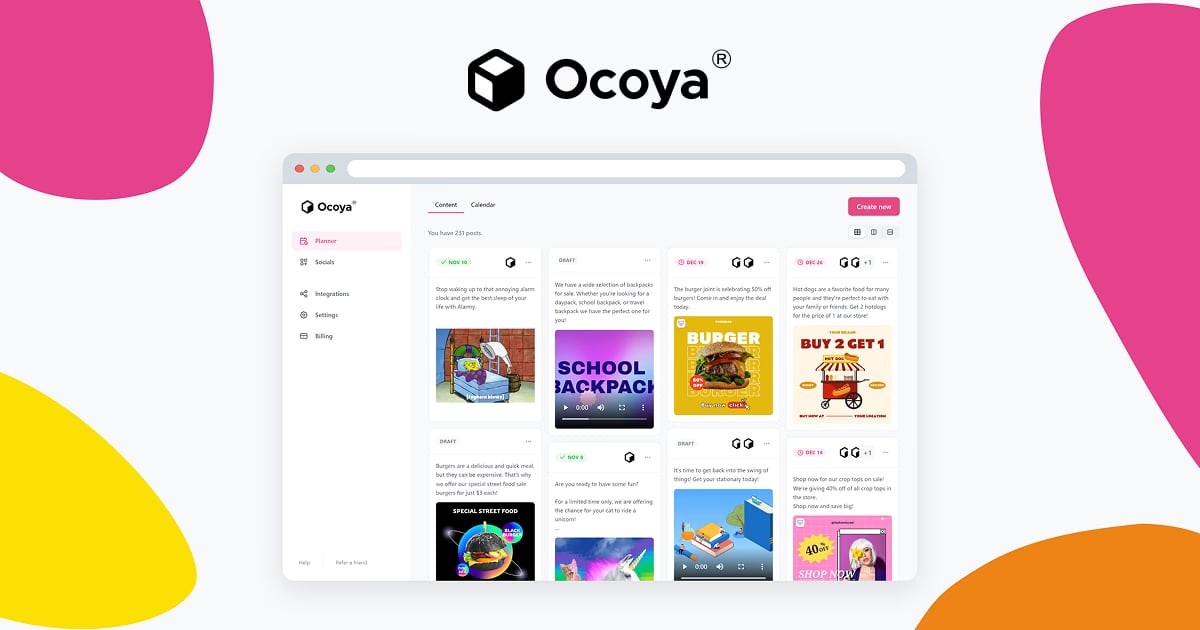
Ocoya shines in AI-driven content creation. It leverages AI agents to produce captions, hashtags, and even entire social posts in bulk. With its in-house editor and Canva integration, you can go from idea to publish-ready visual in minutes. The platform boasts the ability to schedule up to 1,000 posts per minute, perfect for agencies and e‑commerce brands that run high-volume campaigns. However, Ocoya’s AI focuses more on content output than on inbound engagement automation.
Sprout Social: Enterprise Automation Without AI Creation
Sprout Social offers robust automation for scheduling, publishing, and reporting, but it does not natively provide AI copywriting or AI-generated reply suggestions. Its strengths lie in workflow rules, message tagging, and bot-powered customer care routing, which are ideal for large support teams. For teams that crave AI assistance in crafting posts and replies, Sprout Social feels manual by comparison.
Bottom line: SocialEcho gives you AI across both publishing and real-time engagement; Ocoya excels at high-speed content generation; Sprout Social focuses on rule-based process automation for large organizations.
For a broader comparison that includes Hootsuite, see our SocialEcho vs Ocoya vs Hootsuite face-off.
Content Creation & Publishing Efficiency

SocialEcho vs Ocoya vs Sprout Social: Which Tool Wins in 2025? product interface and feature overview.
SocialEcho: AI-Assisted Drafting and Smart Scheduling
SocialEcho’s AI assistant reduces drafting time by generating initial copy that you can refine. Its visual content calendar lets you drag and drop posts, with best-time recommendations pulled from your audience’s activity data. Multi‑platform posting and batch scheduling mean a week’s worth of content can be planned on a Monday morning. The ability to automatically adapt a single post for different networks—changing image dimensions, character counts, and hashtag strategies—is a genuine time-saver.
Ocoya: The Creative Powerhouse
If you live inside a content creation workflow, Ocoya feels native. It includes an advanced editor with social media templates, a media library, and direct Canva integration. AI generates captions and hashtags on the fly. The drag-and-drop calendar and ‘best time to post’ suggestions work well, but the true strength is the sheer volume: agencies can push 1,000 posts per minute across platforms like TikTok, Threads, LinkedIn, and YouTube Shorts. For teams that produce heavy visual content, Ocoya replaces several standalone tools.
Sprout Social: Stable Scheduling Without AI Flair
Sprout’s publishing engine is battle-tested and reliable. It supports complex scheduling rules, A/B testing, and campaign tagging. The strength is in the governance: approval workflows, message tagging, and content libraries that keep brand voice consistent. However, there’s no AI-driven copywriting or cross-platform post adaptation, which adds extra steps for content creators.
Engagement & Unified Inbox Management

SocialEcho vs Ocoya vs Sprout Social: Which Tool Wins in 2025? product interface and feature overview.
SocialEcho: One Inbox, AI-Enhanced Replies
SocialEcho consolidates comments, DMs, and mentions from every connected platform into a single smart inbox. Team members can assign conversations, mark priorities, and resolve threads together. The AI response suggestion feature drafts personalized answers—not just generic templates—based on the message context and your brand’s tone. This reduces the average handling time for common inquiries by over 60% according to internal benchmarks, making community management far less repetitive.
Ocoya: Automated Engagement for High-Volume Channels
Ocoya’s AI agents can handle initial engagement tasks like thanking followers, responding to specific keywords, and triggering messages based on post performance. While useful for scaling outreach, the engagement automation is more about broadcasting than nuanced one-to-one conversation. Teams that need deep, human-like interaction will likely supplement Ocoya with manual oversight.
Sprout Social: Enterprise-Grade Inbox and Collaboration
Sprout’s Smart Inbox is one of the most mature in the industry. It supports message assignment, collision detection (so two team members don’t reply to the same message), and detailed contact histories. For large customer service teams, Sprout Social integrates with CRM and helpdesk tools. The missing piece is AI-suggested replies, which users have requested repeatedly. As community managers on Reddit note, Sprout Social is “built first as a social media management tool, not a true community management platform,” meaning that sentiment analysis and engagement classification often require manual cleanup at scale.
Analytics, Listening & Competitor Tracking
Sprout Social: The Data Powerhouse
Sprout Social delivers the deepest analytics suite among the three. Custom reports, conversion tracking, paid campaign analytics, and advanced listening allow data teams to slice performance by segment, channel, or creative. If your organization lives by ROI dashboards and executive-ready insights, Sprout Social’s analytics are hard to beat. Its competitive benchmarking is solid, but the listening module is often an add‑on that pushes the total cost even higher.
SocialEcho: Practical Insights with Competitor Monitoring
SocialEcho balances ease of use with actionable data. Its custom report builder lets you create visual summaries—engagement trends, fan growth, content rankings—and export them with one click. The built‑in social listening module tracks brand mentions, keywords, and competitor activity without requiring a separate subscription. For mid‑sized teams that need to watch the competitive landscape and report to stakeholders but don’t need a dedicated data analyst, SocialEcho’s analytics are a strong fit.
Ocoya: Basic Metrics for Creators
Ocoya’s dashboard covers essential metrics like reach, engagement, and follower growth. However, some users report that its analytics don’t always align with native platform data. As reviewer Shelby D. noted on Software Advice, “the analytics can be a bit confusing at times and don’t always align with Meta’s analytics.” Ocoya is sufficient for performance snapshots, but teams requiring deep reporting or listening should look elsewhere.
Team Collaboration & Security
Collaboration Workflows
Sprout Social sets the standard for team governance with customizable approval workflows, role-based permissions, and content libraries. It’s purpose-built for large marketing departments where multiple stakeholders must sign off before publishing. SocialEcho offers multi-role access, task assignment, and an approval feature sufficient for small to mid-sized teams, all included in the standard plan. Ocoya includes collaboration tools like workspaces and draft sharing, but its focus is more on creative speed than rigid approval chains.
If your agency or team needs stricter approval flows, our SocialEcho vs Sendible vs Planable comparison breaks down how different tools handle content governance.
Security & Compliance
When handling global brand accounts, data security is non‑negotiable. SocialEcho stands out by providing ISO 27001, ISO 27701, and SOC 2 certifications along with GDPR and CCPA compliance—even on its lower‑priced plans. This enterprise-grade posture makes it especially appealing for cross‑border e‑commerce and foreign trade teams that must meet international data regulations. Sprout Social also offers robust security and compliance features, typically bundled into higher-tier or custom enterprise contracts. Ocoya’s public security certifications are less prominent, which may be a consideration for highly regulated industries.
Feature Comparison at a Glance
| Feature | SocialEcho | Ocoya | Sprout Social |
|---|---|---|---|
| AI‑Generated Copy | ✅ | ✅ | ❌ |
| AI Auto‑Reply for DMs/Comments | ✅ | Partial (keyword‑based) | ❌ |
| Cross‑Platform Post Adaptation | ✅ | ✅ (via templates) | ❌ |
| Bulk Scheduling Speed | High (batch) | Very high (1,000 posts/min) | Moderate |
| Unified Inbox | ✅ | ✅ | ✅ |
| Competitor Tracking | ✅ | ❌ | ✅ (add‑on) |
| Social Listening Included | ✅ | ❌ | ✅ (add‑on) |
| Custom Reports | ✅ | Basic | ✅ (advanced) |
| Approval Workflows | ✅ | Limited | ✅ (advanced) |
| ISO 27001/SOC 2/GDPR | ✅ | Limited info | ✅ (enterprise tier) |
| Free Forever Plan | ✅ | ❌ | ❌ |
Which Tool Should You Choose?
Choose SocialEcho if:
- You manage 3–10 social accounts and value cost predictability.
- AI‑powered auto‑reply and cross‑platform adaptation can reduce your daily workload.
- Security certifications and GDPR compliance are mandatory for your cross‑border business.
- You need built‑in competitor tracking and social listening without add‑on fees.
Choose Ocoya if:
- Your workflow revolves around rapid visual content creation.
- You produce up to 1,000 posts per day and need AI to generate captions and hashtags at scale.
- Canva integration and a rich template library are essential to your creative process.
- You are a freelancer or small agency prioritizing speed over deep engagement or analytics.
Choose Sprout Social if:
- You run a large marketing team that demands advanced reporting and ROI attribution.
- Enterprise‑grade listening, influencer marketing tools, and CRM integration justify the premium price.
- You require complex approval chains and detailed permission controls.
- Budget is not the primary constraint, and your focus is on strategic analytics.
Related reading
- SocialEcho vs Hootsuite vs Buffer: In-Depth 2025 Comparison - Compare SocialEcho, Hootsuite, and Buffer on features, pricing, AI automation, and compliance. See which social media management tool fits your team and budget in 2025.
- SocialEcho vs Buffer vs Sprinklr: Which Tool Fits Your Team? - Compare SocialEcho, Buffer, and Sprinklr on pricing, AI, social listening, and platform support. Find the best fit for cross-border teams, creators, or enterprises.
- SocialEcho vs Dash Social vs Sprinklr: Which One Fits Your Team? - Compare SocialEcho, Dash Social, and Sprinklr on pricing, AI, compliance, and platform support. Find the best tool for cross-border teams, visual brands, or global enterprises.
Sources and further reading
- SocialEcho vs Sprout, Social vs Buffer: The Ultimate Comparison of Social Media Management Tools in 2026 - Lin Wei compares SocialEcho, Sprout Social, and Buffer for efficient, cost-effective social media management and AI-powered team collaboration.
- Ocoya vs Sprout Social - 2026 Comparison - Ocoya vs Sprout Social - See how these products stack up against each other with real user reviews, product feature comparisons and screenshots. Find out which one is best for your organization.
- Community management platforms that's better than Sprout Social : r/CommunityManager - Sprout is built first as a social media management tool, not a true community management platform, and that’s exactly why it feels so limited for the kind of work you’re doing.
Frequently Asked Questions
Can I schedule posts on TikTok and YouTube Shorts with all three?
Yes. SocialEcho supports TikTok and YouTube alongside major networks. Ocoya explicitly includes TikTok, Instagram Reels, and YouTube Shorts with visual-first scheduling. Sprout Social fully supports TikTok scheduling and YouTube publishing for enterprise accounts.
Which tool offers the best free trial?
Sprout Social leads with a 30‑day free trial, giving teams ample time to test its deep analytics. Both SocialEcho and Ocoya offer 7‑day trials, but SocialEcho also provides a permanently free plan with core features.
Does SocialEcho support non‑English interfaces?
Yes. SocialEcho’s workspace is available in both Chinese and English, making it uniquely suited for global teams operating across language barriers. The AI auto‑reply can also handle multilingual customer interactions natively.
How accurate is Ocoya’s analytics compared to native platform data?
Several users on Software Advice have reported slight discrepancies, especially with Meta metrics. For precise, business-critical reporting, direct platform analytics or tools like Sprout Social remain more reliable.
Is Sprout Social worth the cost for a small team?
Generally not, unless your social ROI directly depends on advanced listening and premium reporting. For most small teams, the 16x price difference compared to SocialEcho is hard to justify, and many of the core publishing and engagement features are available for a fraction of the cost elsewhere.
Final Verdict
SocialEcho, Ocoya, and Sprout Social each solve a different piece of the social media management puzzle. SocialEcho wins on price, compliance, and AI‑driven engagement that actually talks to your customers. Ocoya dominates the content creation arena with scale and speed that creative teams will love. Sprout Social remains the gold standard for enterprise analytics and governance, provided you have the budget to support it.
Before you decide, map your team’s greatest pain points—is it the cost of tools, the time spent replying, the content volume, or the need for C‑suite reports? The answer will point you straight to the right dashboard.