
PR Team Leader: Social Media Workflow & Tools for 2026
A PR team leader is judged on reputation, not post volume. But in 2026, reputation is built and tested on social platforms every day. A single mis-timed post, an unanswered crisis comment, or a missed trend can undo months of careful media relations. This article looks at how a PR team leader can run social media as a disciplined communications function, and where an AI-powered workspace like SocialEcho fits into that job.
What the PR Team Leader Role Looks Like Now
The title covers a wide range of setups. In a startup, the PR team leader may be the only communications hire, writing pitches in the morning and scheduling LinkedIn posts in the afternoon. In a global enterprise, the role sits above specialists in media relations, executive communications, and social media, coordinating with marketing and legal.
Across those setups, the job has three constant parts:
- Strategy and narrative. Deciding which stories the company tells, to whom, and in what order.
- Team and process. Making sure approvals, publishing, and response times hold up under pressure.
- Measurement. Proving that communications work changes perception, not just impressions.
Social media touches all three. That is why the PR team leader, not only the social media manager, needs a clear view of the social stack.
Why Social Media Belongs in the PR Team Leader's Remit
First viewport screenshot of www.socialecho.net.
Buyers and journalists now form first impressions long before a sales call or a press interview. They read articles, follow executives, listen to podcasts, and check what a company says on social channels. A modern PR team supports that research journey through thought leadership, media relations, and consistent visibility across channels.
That makes social media a reputation channel, not just a distribution channel. A PR team leader who treats it that way will:
- Align social messaging with press messaging so the story is consistent everywhere.
- Watch for emerging criticism before it becomes a news cycle.
- Give executives a reliable way to show expertise without improvising every post.
- Keep a record of what was said, when, and by whom, which matters in a crisis.
The Traits That Separate Strong PR Team Leaders
Industry commentary on PR leadership keeps returning to a small set of qualities: trustworthiness, consistency, strong listening, curiosity about the wider world, and the willingness to learn from the team. Those traits map directly onto social media work.
- Trustworthiness shows up in transparent corrections and honest replies, not deleted comments.
- Consistency means a publishing cadence the team can sustain, not a burst of activity before a launch.
- Listening means monitoring mentions and comments as seriously as reading a news clip.
- Curiosity means tracking cultural moments and platform changes before they affect the brand.
A PR team leader does not need to be the best copywriter on the team. They need to build a system where those traits are reinforced by process and tooling.
Building a Social Media Workflow a PR Team Leader Can Defend
First viewport screenshot of SocialEcho vs Buffer: Full Comparison on Pricing, Features, and Usability.
Most social media failures are process failures: a post goes out without legal review, a comment sits unanswered for two days, or nobody can explain why engagement dropped. A defensible workflow has five stages.
1. Plan the narrative before the calendar
Start with the stories the company wants to own this quarter, then map posts to them. A product launch, an executive interview, and a research report should reinforce each other across channels rather than compete for attention.
2. Route approvals by risk, not by habit
Not every post needs the same review. Low-risk evergreen content can move quickly. Anything touching litigation, layoffs, pricing, or a sensitive social issue should pass through legal and the PR team leader. Document the thresholds so the team does not guess.
3. Publish with channel-specific intent
A LinkedIn post for an executive and an Instagram post for a consumer audience need different tone and timing. A scheduling tool should support per-channel variants, not force one caption everywhere. If you are comparing options, this ranking of social media scheduling and management software covers fit by team size and use case.
4. Listen and engage on a clock
Set response-time targets by category: complaints within a few hours, media inquiries routed to the right owner, praise acknowledged within a day. Social listening should feed a shared inbox, not a separate dashboard nobody checks.
5. Measure reputation signals, not just reach
Track share of voice against competitors, sentiment shifts around key topics, response times, and which posts drive profile visits or newsletter signups. Reach alone will not convince a CFO.
Where SocialEcho Fits in a PR Team Leader's Stack
First viewport screenshot of www.socialecho.net.
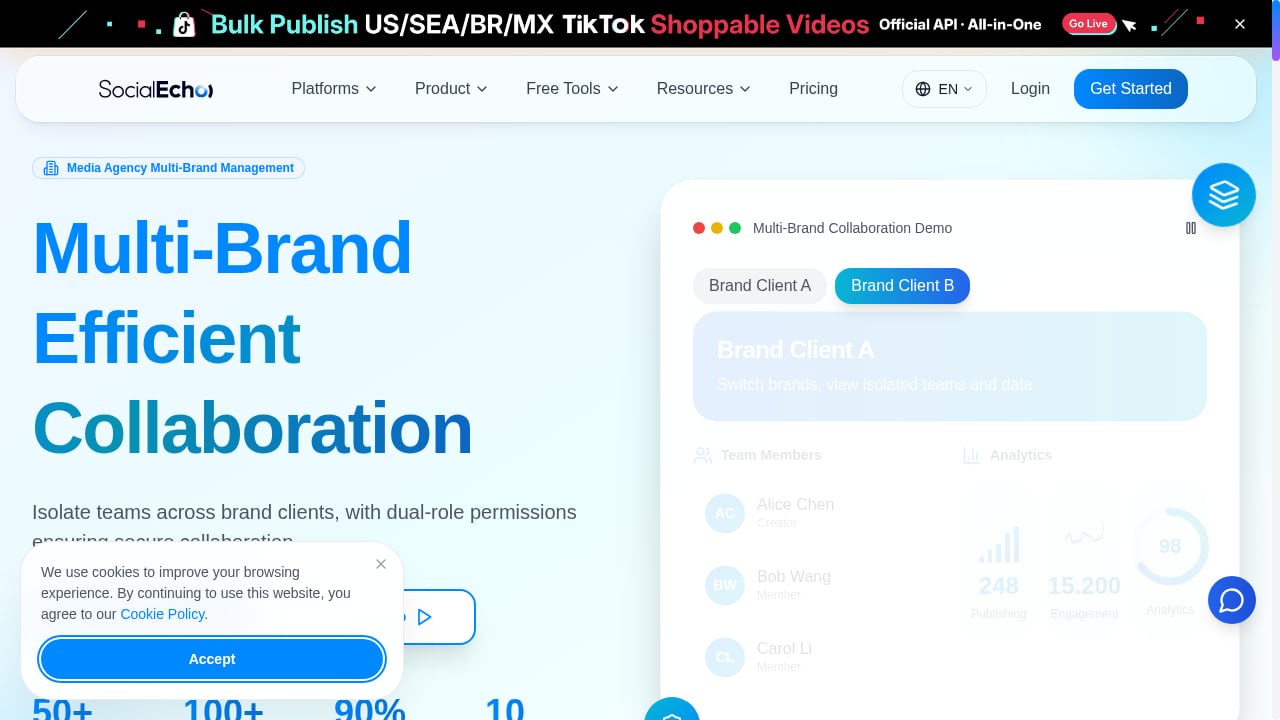
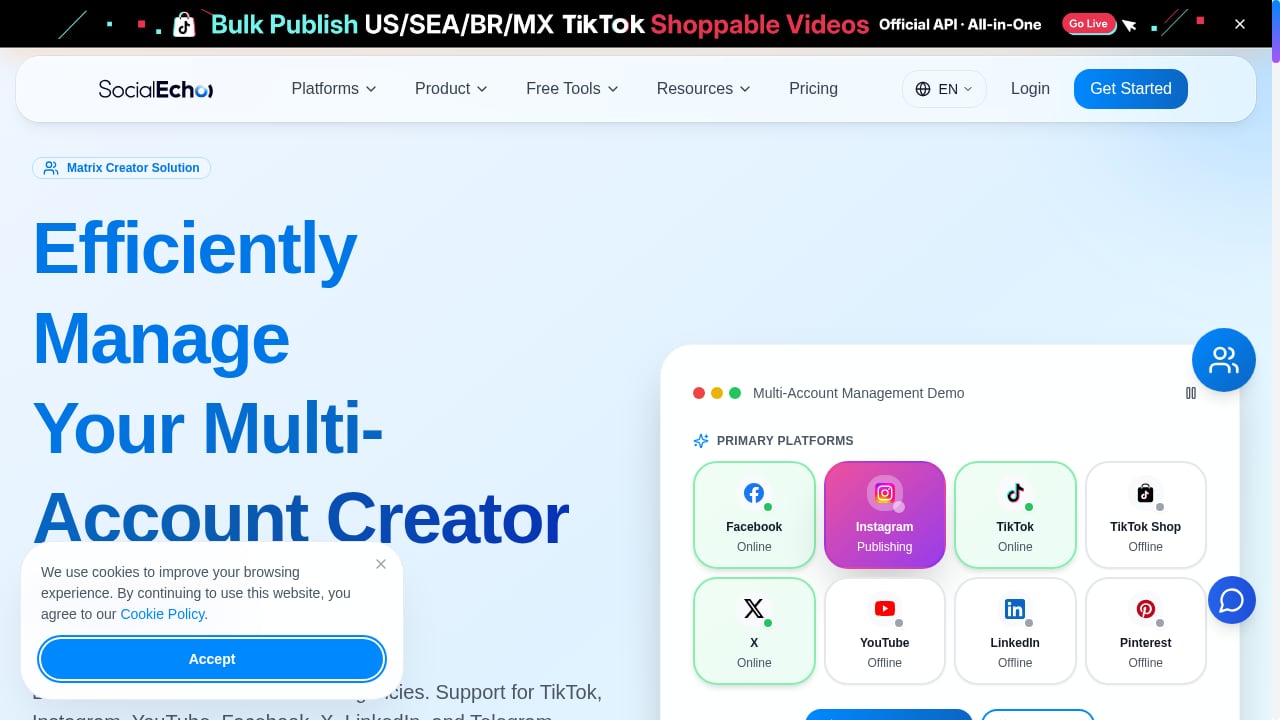
SocialEcho is an all-in-one social media AI workspace for global businesses. It brings publishing, engagement, social listening, analytics, and AI automation into one place across major social platforms. For a PR team leader, the value is less about any single feature and more about reducing the number of tools the team has to reconcile.
Practical ways a PR team leader might use it:
- Centralized publishing with approvals. Coordinate posts across brand and executive accounts without losing track of who approved what.
- Listening tied to response. Route mentions and comments into an engagement workflow so the team can act on what it hears.
- AI-assisted drafting and summarization. Speed up first drafts and daily digests so the team spends more time on judgment and less on assembly.
- Cross-platform analytics. Report on reputation and engagement together rather than stitching screenshots into a slide deck.
If your team also runs deeper listening research, the SocialEcho and Mentionlytics workflow shows how to combine an AI social workspace with a dedicated listening platform. For teams weighing alternatives, the SocialEcho vs Sociality.io comparison breaks down publishing, listening, AI automation, and pricing.
Choosing Tools as a PR Team Leader
First viewport screenshot of 2025 Guide to TikTok Auto-Reply: Boosting Engagement with AI for Comments and DMs.
Tool choice should follow the workflow, not the other way around. Use these questions as a filter:
| Question | Why it matters |
|---|---|
| Does it support multi-account publishing with approvals? | PR often speaks through brand and executive accounts at once. |
| Can listening and engagement live in the same place? | Faster response times and fewer missed mentions. |
| Are analytics exportable and comparable over time? | Reputation reporting needs trend lines, not snapshots. |
| Does AI assist without removing human review? | PR risk tolerance is low; automation needs guardrails. |
| How does pricing scale with seats and channels? | Global teams grow unevenly across markets. |
A useful exercise: ask the social media manager and the media relations lead to score each tool separately. If their scores diverge sharply, the workflow probably needs clarifying before the software does.
Common Mistakes PR Team Leaders Make on Social
- Treating social as a marketing-only channel. PR then loses visibility into the conversations that shape reputation.
- Over-approving. When every post needs three sign-offs, the team stops posting and the brand goes quiet.
- Ignoring executive accounts. Leaders who post inconsistently undermine the credibility the PR team is trying to build.
- Measuring only reach. Impressions do not show whether the right journalists, analysts, or buyers saw the message.
- No crisis playbook. Without pre-approved holding statements and escalation paths, response time collapses under pressure.
Related reading
- SocialEcho vs Sked Social vs ContentStudio: 2026 Comparison - Compare SocialEcho, Sked Social, and ContentStudio on AI automation, publishing, listening, security, and pricing to pick the right social media workspace.
Sources and further reading
- Public Relations Manager Job Description [Updated for 2026] - Build your own Public Relations Manager job description using our guide on the top Public Relations Manager skills, education, experience and more. Post your Public Relations Manager job today.
FAQ
What does a PR team leader do day to day?
They set communications strategy, manage the PR team and agency relationships, oversee executive visibility, and coordinate with marketing and legal. On social media, they own the narrative, approval thresholds, and reputation reporting.
Should the PR team leader manage social media directly?
Usually not day to day. The PR team leader sets direction and guardrails, while a social media manager or specialist handles publishing and engagement. The leader stays accountable for consistency and crisis readiness.
How does AI fit into PR social media work?
AI helps with drafting, summarizing mentions, translating content for global markets, and flagging unusual activity. It should not replace human judgment on sensitive topics, and every AI-assisted post should still pass the team's approval process.
What should a PR team leader measure on social?
Share of voice, sentiment trends, response times, engagement quality, and traffic or signups from social. Pair those with media coverage and executive visibility metrics to show the full reputation picture.
When should a PR team adopt an all-in-one social workspace?
When the team is juggling separate tools for scheduling, listening, and reporting and losing time reconciling them. An all-in-one workspace makes sense once multiple accounts, markets, or approval layers are involved.
Conclusion
The PR team leader's job on social media is not to post more. It is to make sure every post, reply, and silence supports the reputation the company is building. That requires clear approvals, fast listening, honest measurement, and tools that keep the team working from the same picture. Start with the workflow, choose software that fits it, and treat social media as the reputation channel it has become.
For further reading on the leadership traits that matter, see Forbes on PR leadership traits and eLearning Industry on modern PR team roles.