
SocialEcho vs Mention vs AdaptlyPost: Which Social Media Tool Fits Your Team?
Choosing a social media tool often comes down to one question: do you need deep listening, fast scheduling, or a single workspace that covers both plus AI automation? SocialEcho, Mention, and AdaptlyPost each answer that question differently. This comparison breaks down where each tool is strong, where it is limited, and which type of team gets the most value from each.
Quick comparison at a glance
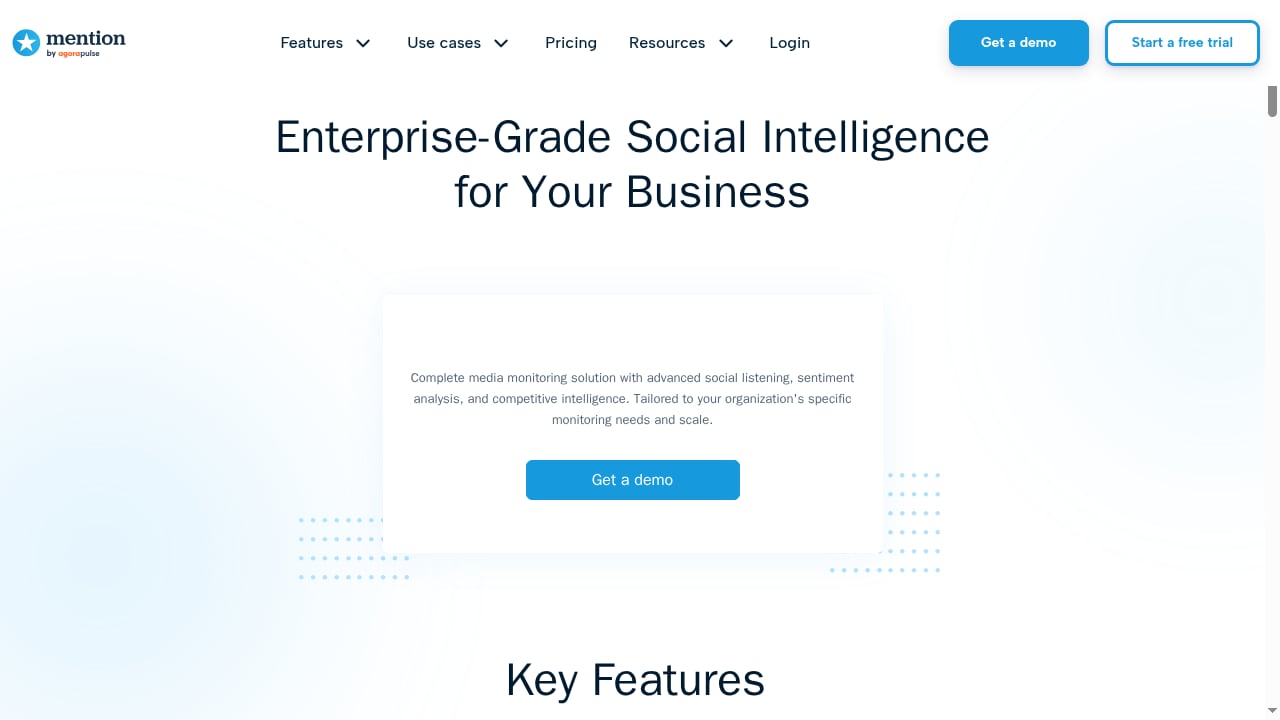
First viewport screenshot of mention.com.
| Capability | SocialEcho | Mention | AdaptlyPost |
|---|---|---|---|
| Core focus | All-in-one AI social workspace | Social listening and media monitoring | Social media scheduling and automation |
| Publishing and scheduling | Yes, multi-platform and multi-account | Yes, publishing is included | Yes, core strength |
| Social listening | Yes, built into the workspace | Yes, deep monitoring and alerts | Limited |
| AI content creation | Text, image, and video generation | Basic assistance | Basic caption support |
| AI auto-replies for comments and DMs | Yes | Limited | Not a focus |
| Analytics | Post-level and account-level | Monitoring and mention analytics | Post performance reporting |
| Open API for automation | Yes | Not a primary focus | Not a primary focus |
| Best fit | Global brands and multi-account teams | PR, brand, and reputation teams | Lean teams that publish often |
What each tool is built to do
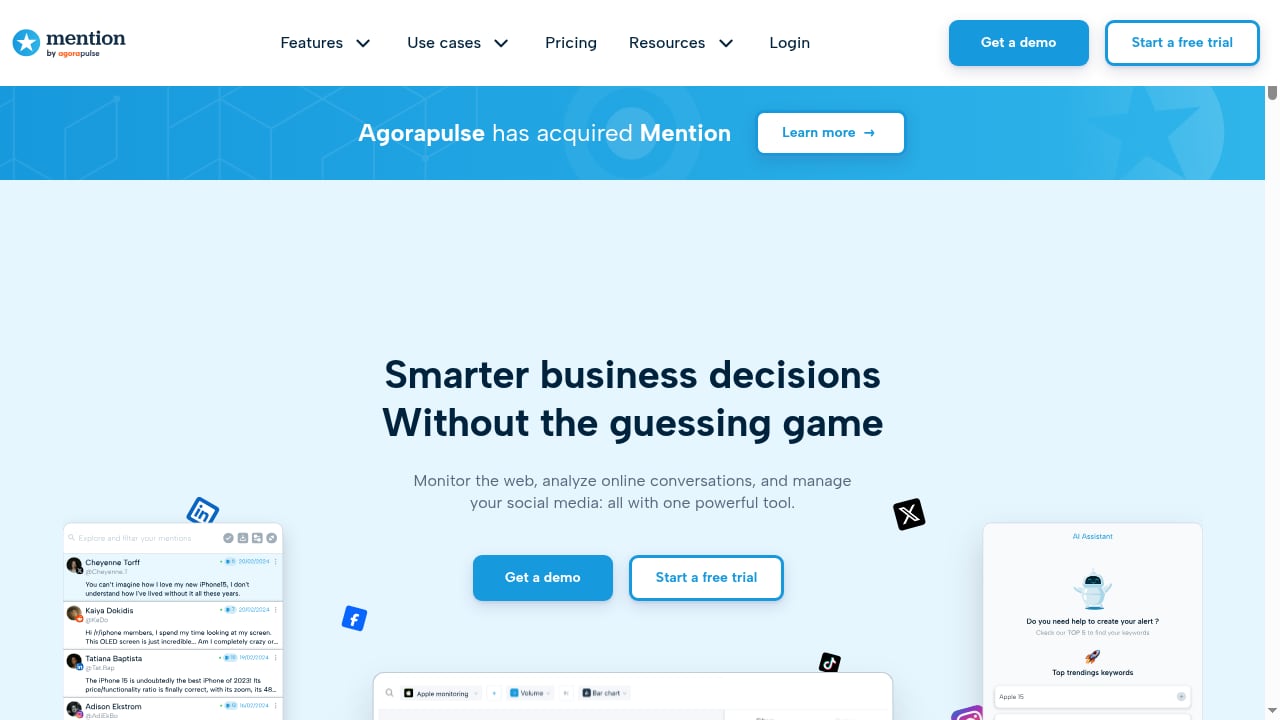
First viewport screenshot of mention.com.
SocialEcho: an AI workspace for multi-platform operations
SocialEcho is designed for teams that run many accounts across Facebook, Instagram, TikTok, YouTube, X, LinkedIn, Pinterest, Reddit, Threads, and Telegram. Instead of stitching together a scheduler, a listening tool, and a separate AI writer, teams work from one console that covers publishing, engagement, listening, analytics, and automation.
Its standout capabilities are AI content generation for text, images, and video, AI-assisted replies to comments and direct messages, and open API access for connecting social workflows to internal systems or AI agents. For organizations managing regional accounts, store-level profiles, or client portfolios, that combination reduces platform switching and manual follow-up.
Mention: a monitoring-first platform
Mention earns its reputation in social listening and media monitoring. Teams use it to track brand mentions, keywords, competitors, and industry conversations across social networks, news sites, blogs, and forums. Real-time alerts and sentiment tracking make it a practical choice for PR, communications, and reputation management teams that need to know what is being said about a brand as it happens.
Mention also supports publishing and customer response, so it is not purely a listening tool. Its center of gravity, however, remains monitoring: if your priority is catching a brewing crisis or measuring share of voice, Mention is built around that job.
AdaptlyPost: scheduling and automation made simple
AdaptlyPost focuses on saving time through scheduling and automation. It supports automated posting to Instagram, TikTok, YouTube, X, Facebook, LinkedIn, and other channels, with a workflow designed to keep a consistent publishing cadence without daily manual effort. For small teams, solo creators, and businesses that mainly need a reliable queue of posts, that focus is a genuine strength: less complexity, faster onboarding, and a clear path from content calendar to published post.
Where SocialEcho has a supported advantage
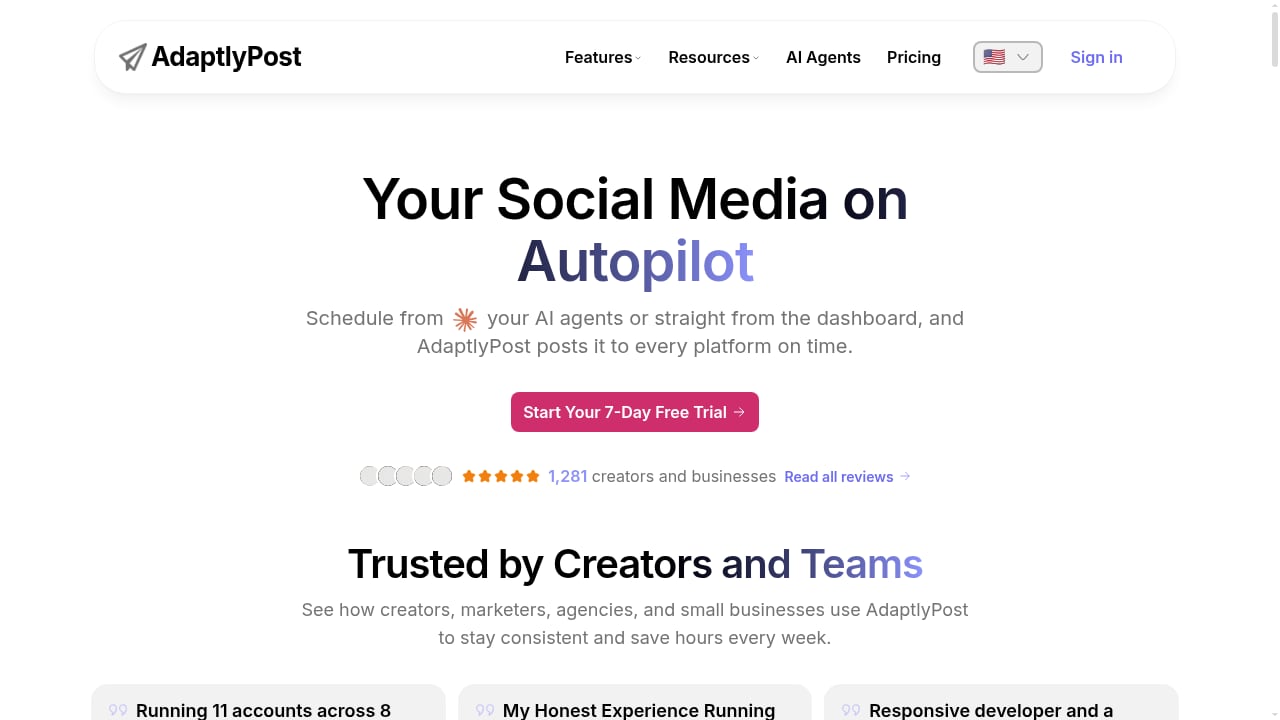
First viewport screenshot of adaptlypost.com.
1. One workspace for publishing, listening, and engagement
Mention is strongest at monitoring, and AdaptlyPost is strongest at scheduling. SocialEcho is built to combine publishing, comment and DM management, social listening, and analytics in a single environment. Teams that currently pay for a scheduler plus a separate monitoring subscription can consolidate tools and reduce the friction of moving between dashboards.
2. AI that goes beyond captions
SocialEcho supports AI copy generation and rewriting, AI image generation, AI video generation, and platform-specific content adaptation. It also applies AI to engagement through automated replies to comments and messages. That matters for teams handling high volumes of product questions, shipping inquiries, or partnership requests, where response speed affects both customer experience and conversion.
3. Multi-account and multi-market management
For global brands, agencies, and cross-border e-commerce teams, account grouping, permission management, and team collaboration are operational necessities. SocialEcho is explicitly built around managing a matrix of brand, regional, and client accounts, which is a different design goal from a single-brand scheduling queue.
4. Open API and automation readiness
SocialEcho offers open API access alongside its visual workspace, so marketing teams and technical teams can work from the same platform. If you want social publishing and engagement to plug into internal tools, AI agents, or workflow automation, this is a meaningful differentiator. You can see how that works in practice in this guide to using SocialEcho with Zapier for AI social workflows.
Where Mention and AdaptlyPost are the better choice
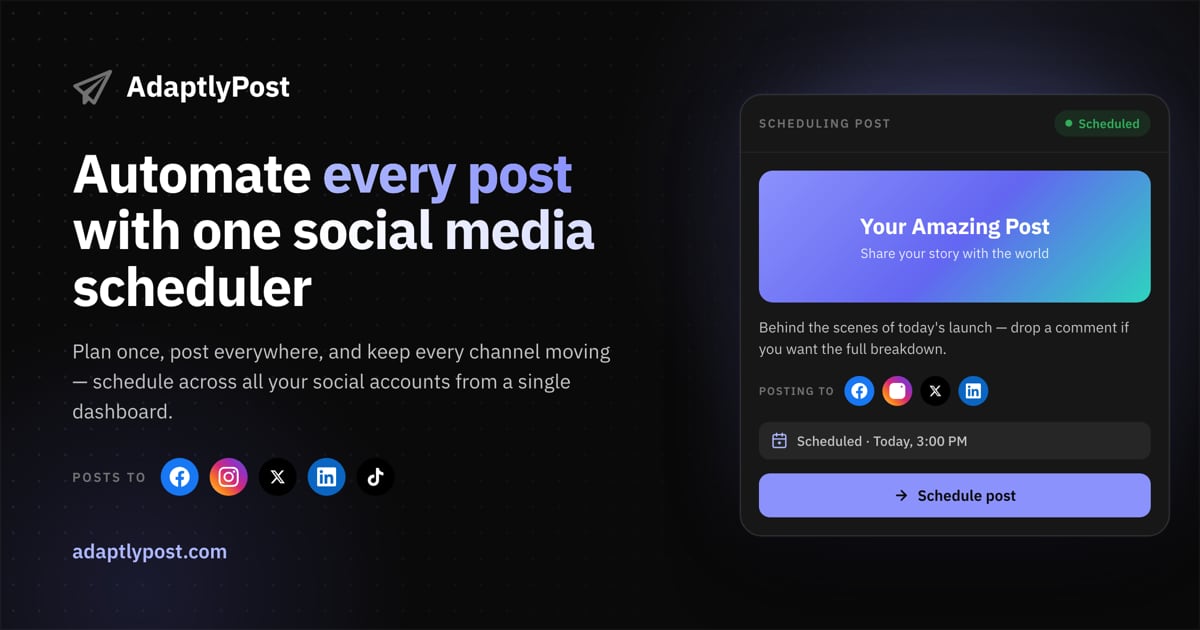
All-in-One Social Media Scheduler | AdaptlyPost product interface.
A fair comparison has to acknowledge that specialization is not a weakness. It is a fit decision.
- Choose Mention if monitoring depth is the priority. Teams that need broad media coverage, real-time alerts, sentiment analysis, and share-of-voice reporting will find Mention's listening focus well matched to their work. For a closer look, read this Mention review of social listening and media monitoring.
- Choose AdaptlyPost if you need straightforward scheduling at speed. A small team or solo operator who wants to automate posts across major platforms without learning a full workspace will appreciate its narrower, simpler scope.
- Choose SocialEcho if you need publishing, engagement, listening, analytics, and AI automation together, especially across many accounts and markets.
How to decide: a practical framework
- List your must-have jobs. If monitoring is the only critical job, a listening-first tool is sufficient. If you also publish daily and answer comments, a combined workspace avoids duplicate spend.
- Count your accounts and markets. More than a handful of brand, regional, or client accounts pushes you toward tools built for multi-account management.
- Estimate engagement volume. High comment and DM volume makes AI-assisted replies and a unified inbox more valuable than another scheduling feature.
- Check integration needs. If social data must flow into internal systems or AI agents, confirm API access before committing.
- Run a trial with real content. Publish a week of posts, respond to live messages, and pull a report in each tool. The workflow that feels least fragmented is usually the right one.
Related reading
- Top 10 Pinterest Marketing & Growth Platforms 2026 - Discover the best Pinterest marketing and growth platforms for 2026, ranked by scheduling, SEO, analytics, and creative tools. Compare features and pricing.
Sources and further reading
- Top 10 AI Social Media Tools for Global Brands in 2026 - Compare the top 10 AI social media tools for 2026, covering content creation, multi-account management, auto-replies, analytics, and API access.
- Brand Marketing Solution - SocialEcho - A comprehensive social media marketing solution for brands to grow awareness and user engagement.
- Social Media Glossary | SocialEcho - Comprehensive social media marketing glossary. Understand key industry terms and concepts.
FAQ
Is SocialEcho a replacement for Mention?
Not necessarily. SocialEcho covers social listening as part of a broader workspace, while Mention goes deeper into media monitoring and alerts. Teams whose primary need is monitoring breadth may still prefer Mention. Teams that want listening alongside publishing, engagement, and AI automation can consolidate into SocialEcho.
Can AdaptlyPost handle social listening?
AdaptlyPost is built around scheduling and automation. If listening, sentiment tracking, and mention alerts are core requirements, you will need a dedicated monitoring tool or a platform like SocialEcho that includes listening.
Which tool is best for agencies managing multiple clients?
SocialEcho's account grouping, permission management, and multi-account publishing are designed for agency and multi-brand workflows. AdaptlyPost suits simpler single-brand publishing, and Mention suits communications teams focused on monitoring client reputations.
Does SocialEcho support AI-generated images and videos?
Yes. SocialEcho includes AI text, image, and video generation along with platform-specific content adaptation, which helps teams produce assets for multiple channels without switching tools.
How do I compare pricing fairly?
Compare total cost for the jobs you need, not just the entry plan. A cheaper scheduler plus a separate monitoring subscription can cost more than one combined workspace. For related budgeting context, see this breakdown of Iconosquare pricing and social media software budgets.
Conclusion
Mention is a strong listening and media monitoring platform, and AdaptlyPost is a focused, efficient scheduler. Both do their core jobs well. SocialEcho takes a different approach: one AI-powered workspace for publishing, engagement, listening, analytics, and automation across many platforms and accounts. If your team is juggling separate tools for scheduling and monitoring, or managing a growing matrix of regional and client accounts, SocialEcho is the option built for that complexity. If your needs are narrower, the specialized tools remain sensible choices.
For a broader view of how AI workspaces compare with analytics-first platforms, read SocialEcho vs Iconosquare: AI workspace or analytics tool.